

How Should Glass Bong Wholesalers Control SKU Proliferation and Slow-Moving Inventory?
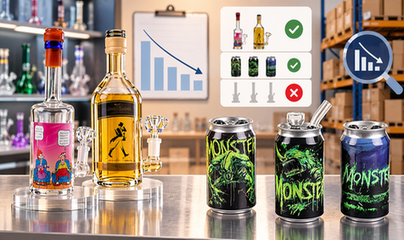
For glass bong wholesalers, the main way to control SKU proliferation is to keep the core offerings separate from the ‘weird and wonderful’ designs that may only appeal to a niche market. Monitoring the sell-through of individual SKUs and limiting reorders on products that are taking up space in the warehouse but not generating repeat business is also crucial. While glass bong catalogs are constantly growing, all products within the offering serve to meet the same customer need. Therefore, for purchasing managers and distributors alike, the value of assortment breadth is that it can drive sales while not taking up too much cash or warehousing space. As such, a sensible inventory strategy would include clear entry points for new SKUs, regular performance reviews and a clear exit strategy for ‘slow sellers’.
Why Does SKU Proliferation Become a Problem in Glass Bong Wholesale?
A large assortment may look good in a catalogue but every extra SKU creates extra inventory decisions. As a glass bong wholesaler you will have to check the carton quantities and the warehousing space needed. Also you have to take into account the risk of damage during transport, the making of images for the products, the replacement stock needed and the future re-order-commitments for every item.
At first the problem is not too serious as one tries to cover for example the seasonal demand with some additional new designs, some color versions are kept on stock and older products are reordered from time to time as they are still selling. The catalog for the existing demand base is getting too wide.
More Choice Does Not Always Mean More Productive Inventory
Instead of asking yourself how many styles you can add to your assortment, you should wonder whether the styles you already offer are really worth it.
A useful SKU review divides products into three different categories.
|
SKU Group |
Typical Role |
Purchasing Approach |
|---|---|---|
|
Core SKU |
Stable repeat demand |
Maintain regular stock |
|
Test SKU |
New design or unproven demand |
Buy cautiously and review quickly |
|
Slow-moving SKU |
Weak or declining turnover |
Reduce, replace, or discontinue |
The above structure allows for new product testing whilst preventing trial items from becoming permanent stock items.
A broad glass bong and smoking accessories range is of interest to Wholesale buyers only if each SKU has a clear commercial role and visual variety is used effectively.
How Should Buyers Decide Which Glass Bong SKUs Deserve Core Stock Status?
I define core stock as those SKUs which can be repeatedly stocked over time versus items that you may like or that have had one strong sales week. Core items deserve to be a core part of your stock in your warehouse and to garner reorder attention.
The easiest way to define a group of customers is to compare several operational signals over customers, rather than just total units sold.
Review Sell-Through, Reorder Frequency, and Stock Age Together
A purchasing team can track:
units sold during the review period;
average stock held;
number of reorders;
time since the last sale;
gross margin contribution;
number of customer accounts buying the SKU.
An item that sells consistently across accounts is generally more valuable than a novelty item that looks great but gets purchased by only one customer.
Stock age is also important. Even small volumes of old stock past the expected time for sale of a design is a warning sign.
For practical assortment control, buyers can limit themselves to three actions per SKU.
Maintain: demand is repeatable and stock turns at an acceptable rate.
Watch: demand exists but is inconsistent or seasonal.
Exit: inventory movement is too slow to justify another reorder.
There is no need for an industry-wide benchmark for this decision. Each wholesaler can base its decision on their sales cycle, customer base and warehouse efficiency.
How Can Wholesalers Test Novelty Designs Without Creating Dead Stock?
Although novelty products are useful as they provide a different look for retailers, these can be some of the slowest moving products and can generate a lot of slow moving inventory. They may look great online or in a showroom but fail to get repeat wholesale orders.
It’s better to treat novelty as a controlled test rather than a full assortment commitment.
Use Small Initial Commitments and Defined Review Dates
Novelty designs should have clear goals before they are introduced. This could be minimum sell-through, number of customer accounts, time for reorder decision etc.
The test should answer three questions:
Did the product sell?
Did more than one customer reorder it?
Did it move quickly enough to justify space and working capital?
A SKU should be removed from active status even if there is some inventory left on hand if the answer to strong inventory holder is weak.
Although interesting products should not automatically become regular stock items, novelty can still have a positive role within a balanced assortment.
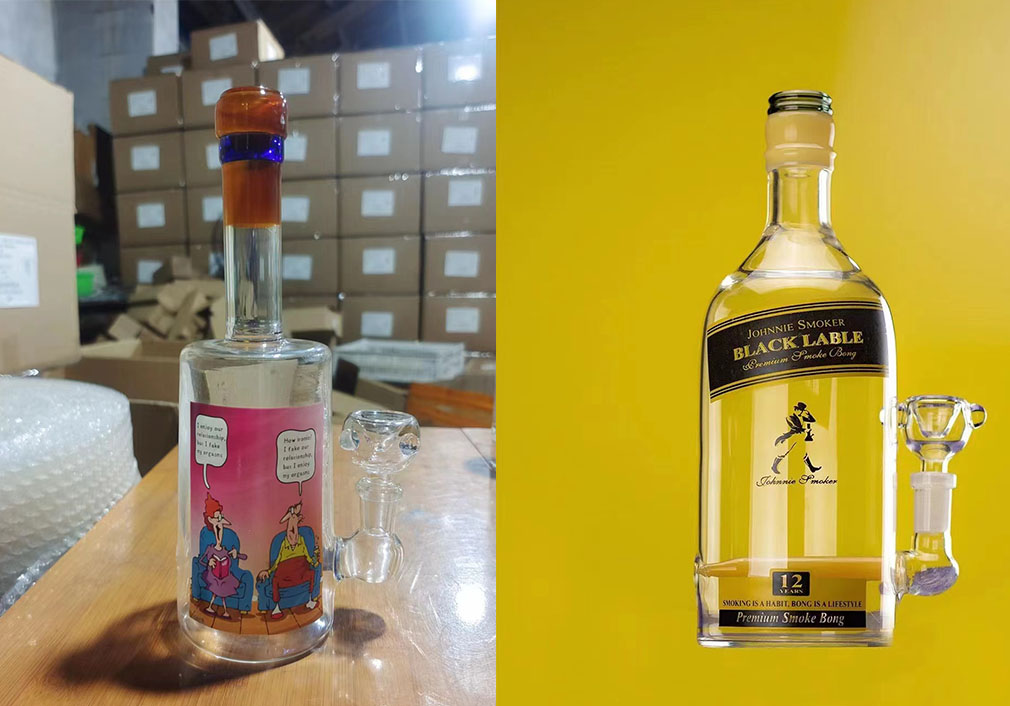
The company website showcases a diverse array of distinctive smoking-accessories. Many of the glass bongs are designed with unique visual styles and alternate shapes. As such, for a wholesaler, disciplined test-and-review of such diverse products is crucial.
What Should Buyers Do With Slow-Moving Glass Bong Inventory?
Inventory that moves slowly in stores can become more expensive the longer it is not sold. It takes up space, ties up cash that was spent to purchase the item and can become part of a very complicated assortment.
Identify the reason for the slow moving SKU. Is it poorly positioned, overpriced, too similar to another product, too specialized for the customer base, or is it simply out of the demand window?
Diagnose Before Discounting
Do not immediately reduce the price without knowing the cause first.
A useful review asks:
Is the design too similar to a stronger SKU?
Is the carton quantity too large for typical customers?
Is the item aimed at a customer segment the wholesaler rarely serves?
Has the product lost relevance because newer designs replaced it?
Is the selling price out of line with comparable products?
Once you know the reason, you can respond more specifically.
Actions to consider: Offer slow stock as a bundle with stronger products. Promote in limited time clearance sale. Move SKU to alternate customer segment. Discontinue reorders. Discontinue item and replace with higher margin product.
Slow moving SKUs should not be reordered just because they had a low price recently.
How Can Buyers Prevent the Same Inventory Problem in Future Orders?
By linking purchasing decisions to the SKU performance data rather than pricing quotes from isolated suppliers, better Inventory control can be created. A low purchase price per unit does not necessarily lead to a good commercial deal if the quantity to be ordered is greater than the actual demand.
Deciding on reorders should be based off your own internal sales numbers before needing to contact a buyer for a new quotation.
Set SKU Rules Before the Next Buying Cycle
A practical wholesale policy can include:
a maximum number of active SKUs within each product segment;
a defined review period for new items;
a minimum sales threshold before reorder;
a maximum acceptable stock age;
a formal exit decision for underperforming designs.
These exact limits would need to be derived from the company’s own sales data, not from generic industry benchmarks.
The method also helps to keep assortment planning and supplier negotiations separate. First you decide whether you want to hold more stock of a SKU, then you negotiate the price, packaging or other customized aspects with the supplier.
An attractive quotation can even induce a buyer who has cancelled an order to continue using an underperforming product.
When it comes to reviewing OEM and order support for custom projects, the key principle is to ensure that any customization supports your proven assortment strategy and does not result in the creation of additional weak products.
Need Help Matching Glass Bong Assortments to Wholesale Programs?
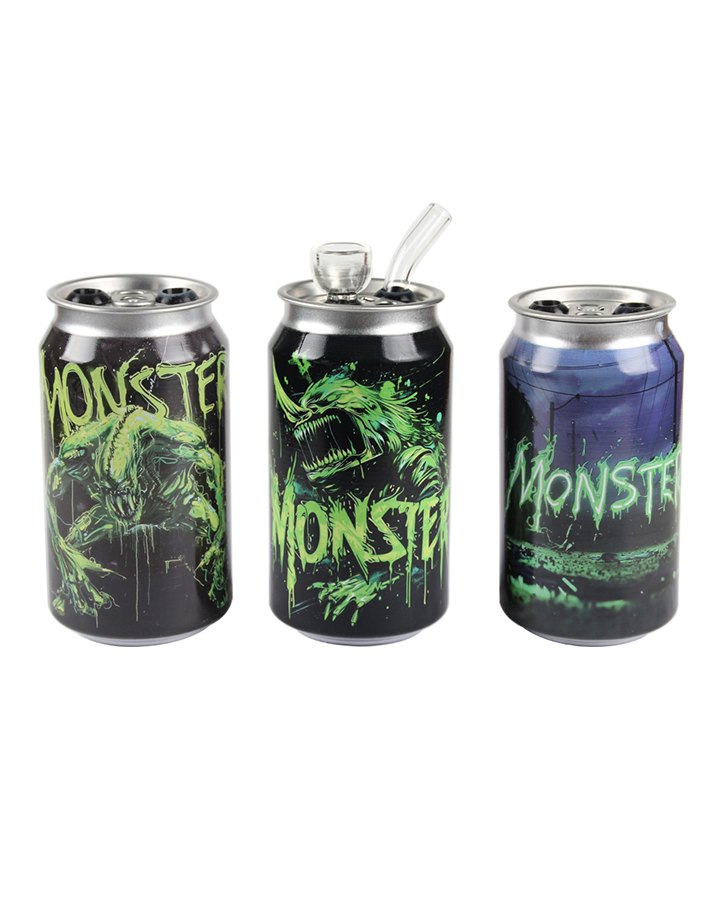
Once buyers have defined core, test, and exit SKUs, supplier discussions become more focused because the purchasing brief reflects a real inventory plan rather than a request for maximum variety. Bella420facto-smoking accessories co.,ltd. supplies glass bongs and other smoking accessories for wholesale and private-label projects. Its published range includes products such as the Beverage Bottle Glass Bong, listed in high borosilicate glass with an 8.5-inch size, individual-box packaging, and 50 pieces per carton. Those SKU-level details are useful when buyers compare assortment roles, carton commitments, and packaging requirements. The company also supports customization and shipment coordination, which can be discussed after the buyer has decided which SKUs deserve continued investment.
Conclusion
Disciplined SKU control for glass bongs requires more than just cutting down on styles in the product range. Firstly, you have to be able to differentiate between main articles and test items. Regular check-up on sales and stock aging off helps to identify products that, for reasons of warehouse space or capital, should no longer be ordered. Novelty products can still contribute to the breadth of your assortment but must first prove themselves in controlled trials with defined review dates. A disciplined SKU policy simplifies future purchasing decisions, since products are reordered on the basis of actual demand rather than mere appearance or low offer price from the supplier.
FAQs
1. What causes SKU proliferation in glass bong wholesale?
SKU proliferation is often the result of the buyer adding designs, colors, sizes and novel products to the range without taking out older products. Over time a large number of similar SKUs will have been added, all competing for the same customer and warehouse space.
2. How can wholesalers identify a slow-moving glass bong SKU?
Record sales frequency, stock age, reorders, customer numbers and quantities held for each SKU. Identify slowly selling items held for long periods and review before re-ordering.
3. Should novelty glass bong designs be stocked in large quantities?
Wait until proven demand. Novelty designs are better to treat as test SKUs with minimum initial inventory commitment and a specific review date to then decide whether to re-order or dis-continue the design.
4. What should buyers do before reordering a weak-performing SKU?
Review your recent sales and your current stock, the demand from your customers and see if there is a better product on the market that can fulfill the same need. Make your reordering decision before you start price negotiating. The quotation you receive may look very attractive, but you don’t want to make your decision after you have received it.
5. How often should glass bong assortments be reviewed?
Review frequency should match the sales cycle of the wholesaler and their reorder frequency. Fast-moving product types may need a review every month, whereas slower categories can be reviewed less frequently, as long as the stock’s age and the worst-selling SKUs are visible.
REGIONS OF THE WORLD


