
What Drives the Total Landed Cost of Rolling Papers Wholesale for B2B Buyers?
Oct. 08, 2026
12:46:48
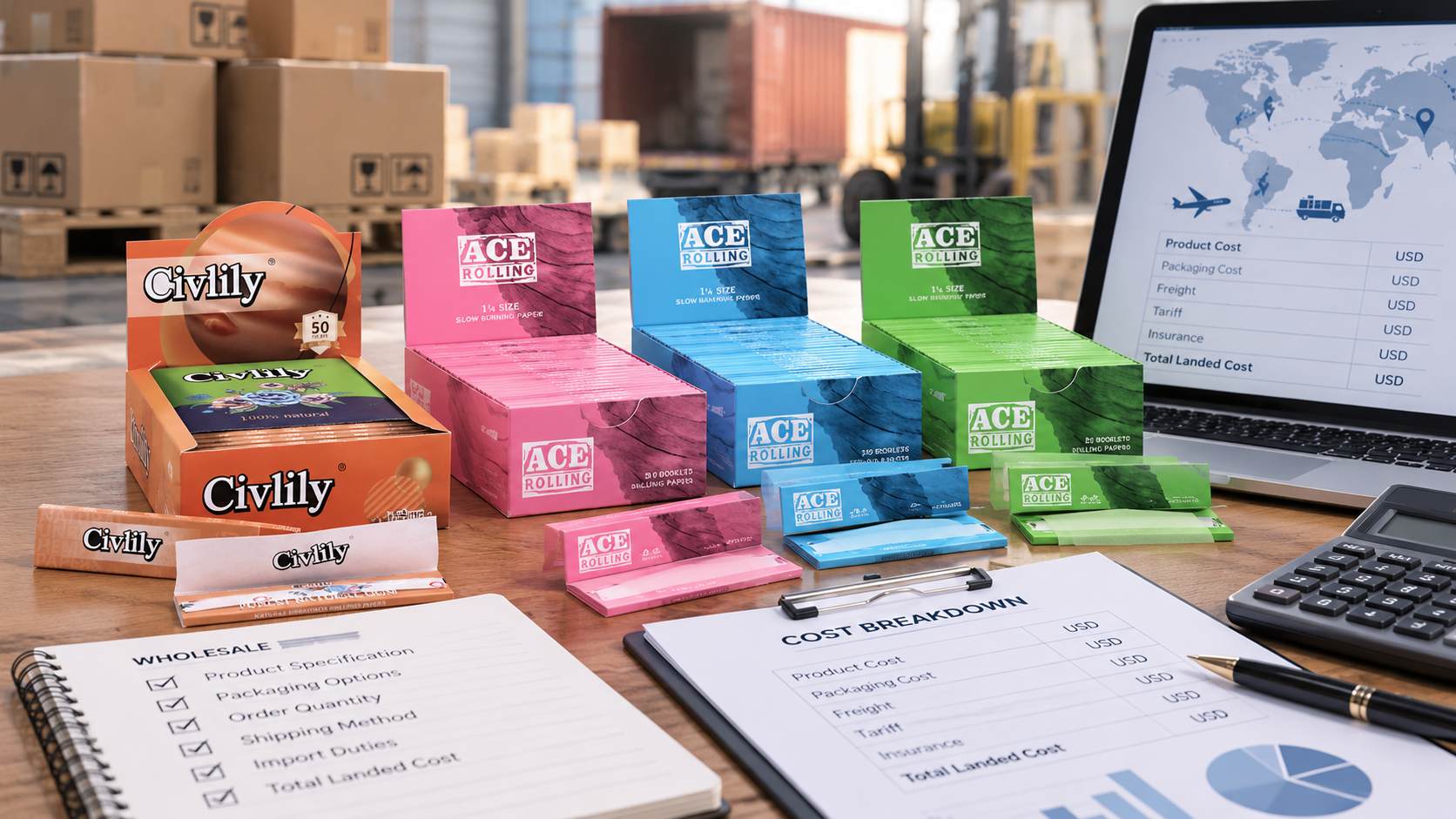
A lower wholesale price does not always mean a lower purchasing cost. Importers and distributors buying rolling papers need to account for freight, customs charges, packaging, handling, and the quantity of saleable goods received before deciding which quotation is commercially suitable. Two suppliers may offer comparable products at different unit prices, yet the final cost per retail booklet can change considerably once the goods reach the buyer’s warehouse. For purchasing managers working with limited margins, these differences affect retail pricing, inventory planning, and reorder decisions. Understanding the total landed cost of rolling papers wholesale helps buyers compare quotations on the same basis and identify expenses that might otherwise appear after an order has been confirmed.
What Costs Should Be Included When Calculating the Landed Cost of Rolling Papers?
A useful landed-cost calculation begins with the amount required to bring the goods to the agreed destination, rather than the price shown on the supplier’s quotation. For rolling paper importers, this distinction matters because product value is only one part of the purchasing expense.
Separate the Product Price From Import Expenses
The total landed cost may include the purchase price, international freight, insurance, import duties, nonrecoverable taxes, customs clearance, destination handling, and inland transportation to the receiving warehouse.
The exact calculation depends on the agreed delivery terms and the buyer’s accounting treatment. Recoverable taxes, for example, may need to be recorded separately from the inventory cost.
A purchasing worksheet can use the following structure:
| Cost component | Information required |
| Product cost | Confirmed quotation and order quantity |
| International freight | Forwarder’s quotation for the shipment |
| Cargo insurance | Premium or agreed coverage cost |
| Import duties and taxes | Applicable charges at destination |
| Customs clearance | Broker and documentation fees |
| Destination handling | Terminal and local handling charges |
| Inland transportation | Delivery cost to the receiving warehouse |
The buyer should establish which charges are already included in the quoted price before adding them to the calculation. Otherwise, freight or handling expenses may be counted twice.
Calculate the Cost Per Saleable Unit
Wholesale quotations may use cartons, display boxes, booklets, or individual sheets as their pricing units. Comparing these prices directly can produce misleading results.
For most retailers and distributors, the calculation should ultimately reach the unit used for inventory and resale.
Landed cost per saleable booklet = Total attributable landed cost / Number of saleable booklets received
The denominator matters as much as the total cost. A shipment containing damaged or incomplete retail packs may have fewer saleable units than the original purchase order specified.
How Do Shipping Terms Change the Actual Cost of a Wholesale Order?
A quotation cannot be evaluated properly without identifying the point at which the supplier’s price stops covering expenses. International shipping terms determine which party is responsible for particular transport arrangements, costs, and risks.
Compare Quotations Using the Same Delivery Point
Consider two suppliers offering the same paper specification. One quotes a price that covers delivery to the departure port, while another includes transportation to the destination port.
The second quotation may appear more expensive even though it includes services that the first buyer would need to arrange separately.
The International Chamber of Commerce’s Incoterms rules provide a framework for defining delivery responsibilities, costs, and risks in international contracts. Buyers should confirm the agreed Incoterms rule, named place, and applicable version before comparing quotations.
A purchasing manager should request a clear breakdown of the included services, including export handling, main carriage, insurance where applicable, destination charges, and final delivery.
Why Should Smaller Orders Be Evaluated Separately?
A small shipment may carry a relatively high freight cost per booklet because some logistics charges do not decrease proportionally with shipment volume.
For example, a shipment may incur documentation, customs clearance, or local handling expenses regardless of whether it contains a few cartons or a larger consolidated order.
Combining orders can sometimes distribute those charges across more units, but the additional inventory must still be commercially justified.
An importer comparing freight options should therefore examine both the total shipment cost and the cost allocated to each saleable retail unit.
How Can Packaging and Carton Configuration Affect Wholesale Purchasing Costs?
Packaging influences landed cost through several connected expenses. It affects the number of saleable units in a shipment, the space required for transportation, and the amount of handling needed when the goods reach the warehouse.
For buyers reviewing different rolling paper formats , the first step is to establish the exact packaging configuration associated with each quoted product.
Confirm the Pricing Unit Before Comparing Cartons
Two cartons may contain different numbers of display boxes or booklets. A lower carton price is not meaningful until the quantity of saleable products has been established.
The purchasing specification should identify the number of booklets per display box, display boxes per carton, and total cartons ordered.
It should also distinguish standard packaging from customized retail packaging because design preparation, printing, and packing requirements may affect the quoted production cost.
Once those quantities are confirmed, buyers can calculate the product cost per booklet and then allocate the additional logistics expenses to the same unit.
Consider Shipping Volume and Warehouse Handling
Transportation costs may depend on the shipment’s weight, dimensions, or chargeable volume, depending on the freight service being used.
A packaging configuration that occupies more space can increase freight costs even when the product quantity remains unchanged.
At the receiving warehouse, oversized or inefficient cartons may also require more storage space and handling.
However, reducing packaging material without considering product protection can create additional costs through damaged booklets, crushed display boxes, or unsaleable retail packaging.
The purchasing decision should therefore consider the packed unit’s dimensions and condition together, rather than treating packaging merely as a design expense.

What Hidden Costs Can Change the Profitability of a Rolling Paper Import Order?
A landed-cost estimate based only on the initial quotation may overlook expenses that become visible after production or delivery.
Purchasing teams should distinguish between confirmed charges, reasonable cost allowances, and potential risks that require further information before a decision can be made.
Account for Damage, Shortages, and Replacements
Rolling papers are lightweight, but retail packaging can still be affected by moisture, compression, or handling during transportation.
A damaged display box may prevent a retailer from selling the product in its intended condition, even when the paper inside remains usable.
Importers should establish how shortages and damaged goods will be documented, who will handle claims, and whether replacement products create additional freight or handling expenses.
An allowance for damaged stock may be useful when preparing internal purchasing estimates, but it should be based on the buyer’s own shipment records rather than an invented industry-wide percentage.
Include Inventory and Reorder Costs
The initial unit price may decrease when order volume increases, but purchasing more inventory also ties up working capital.
A distributor should consider expected sales, available warehouse space, storage costs, and the time required to replenish stock.
For example, ordering more cartons to obtain a lower unit price may make little commercial sense if the additional stock remains in storage longer than expected.
The same reasoning applies to customized packaging. A change in artwork or retail positioning may leave older packaging unsuitable for a later sales program.
A purchasing manager should compare the expected landed-cost saving with the additional inventory commitment before increasing the order quantity.
How Should Buyers Compare Rolling Paper Supplier Quotations Before Placing an Order?
Once the individual cost components have been identified, the remaining task is to compare suppliers using equivalent specifications and delivery conditions.
A meaningful comparison should reveal differences in the actual purchasing expense rather than differences caused by incomplete quotations.
Use a Common Cost Comparison Sheet
A purchasing file can organize the information as follows:
| Comparison item | Supplier A | Supplier B |
| Product specification | Confirmed | Confirmed |
| Price per booklet | Quoted value | Quoted value |
| Order quantity | Confirmed | Confirmed |
| Packaging configuration | Confirmed | Confirmed |
| Delivery terms | Confirmed | Confirmed |
| Freight and import expenses | Calculated | Calculated |
| Total landed cost | Calculated | Calculated |
| Cost per saleable booklet | Calculated | Calculated |
If the two suppliers offer different specifications or packaging quantities, those differences should be resolved before drawing a conclusion from the calculated unit costs.
Confirm the Commercial Details Before Payment
The final purchasing file should identify the approved sample, order quantity, packaging configuration, delivery terms, production schedule, payment terms, and responsibility for shipping arrangements.
Where customization is involved, buyers should also confirm whether artwork preparation, sampling, or packaging setup is included in the quotation.
These questions can be addressed during the OEM and order preparation process , but the agreed commercial details should ultimately appear in the quotation or purchase documentation.
The objective is to make the final cost calculation traceable. When a charge changes, the buyer should be able to identify whether the difference comes from product pricing, shipping arrangements, customs expenses, or the quantity of saleable stock received.
Need Help Confirming Rolling Paper Specifications and Wholesale Order Details?
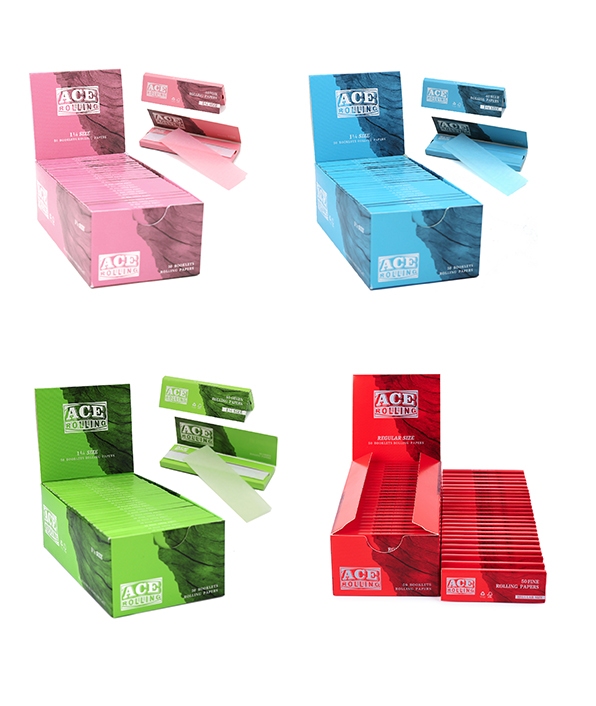
Once product specifications, packaging quantities, and delivery requirements have been established, buyers can prepare a more complete quotation request. Bella420facto-smoking accessories co.,ltd. supplies rolling papers and related smoking accessories for wholesale and private-label projects. Its published product range includes Civlily Cigarette Rolling Paper Unbleached 1¼ and King Size y ACE Cigarette Rolling Paper Unbleached 1¼ and King Size , with product-specific packaging and carton information. The company’s support information also covers customization and shipment coordination. Buyers comparing purchasing costs should confirm the applicable product configuration, order quantity, quotation terms, and shipping responsibilities before calculating the final cost per saleable unit.
Conclusión
The total landed cost of rolling papers wholesale depends on more than the quoted product price. Freight, import charges, packaging configuration, handling expenses, and the number of saleable units all influence the actual purchasing cost. Before confirming an order, buyers should normalize supplier quotations, identify the agreed delivery responsibilities, and calculate costs using the same retail or inventory unit. A documented comparison makes it easier to recognize hidden expenses, evaluate order quantities, and establish a realistic purchasing budget without relying on the lowest initial quotation.
Preguntas frecuentes
1. What is the total landed cost of rolling papers?
Total landed cost is the cost attributable to bringing an imported rolling paper order to the agreed destination. It may include product value, freight, insurance, import duties, clearance fees, and inland transportation, depending on the delivery terms and accounting treatment.
2. How can buyers calculate the landed cost per rolling paper booklet?
Add the applicable product, shipping, import, and handling expenses, then divide the total by the number of saleable booklets received. Use the same packaging unit when comparing different supplier quotations.
3. Does a larger wholesale order always reduce landed cost?
Not necessarily. Larger shipments may spread certain logistics expenses across more units, but additional inventory creates storage and working-capital costs. Buyers should compare the potential unit-cost saving with expected sales and replenishment requirements.
4. Why do delivery terms matter when comparing rolling paper suppliers?
Delivery terms establish which transportation tasks, costs, and risks belong to the buyer or seller. Two quotations using different terms may include different services, so their prices should be adjusted to the same delivery point before comparison.
5. What information should buyers request before comparing rolling paper wholesale prices?
Request the complete product specification, price unit, order quantity, packaging configuration, delivery terms, production schedule, and included shipping services. Confirm which expenses remain payable after the goods leave the supplier.


INVERSIÓN CALIENTE EN TODO
REGIONES DEL MUNDO
REGIONES DEL MUNDO


