
Custom Rolling Papers: 7 Things Brands Should Decide Before Placing an OEM Order
Aug. 27, 2026
00:00:50
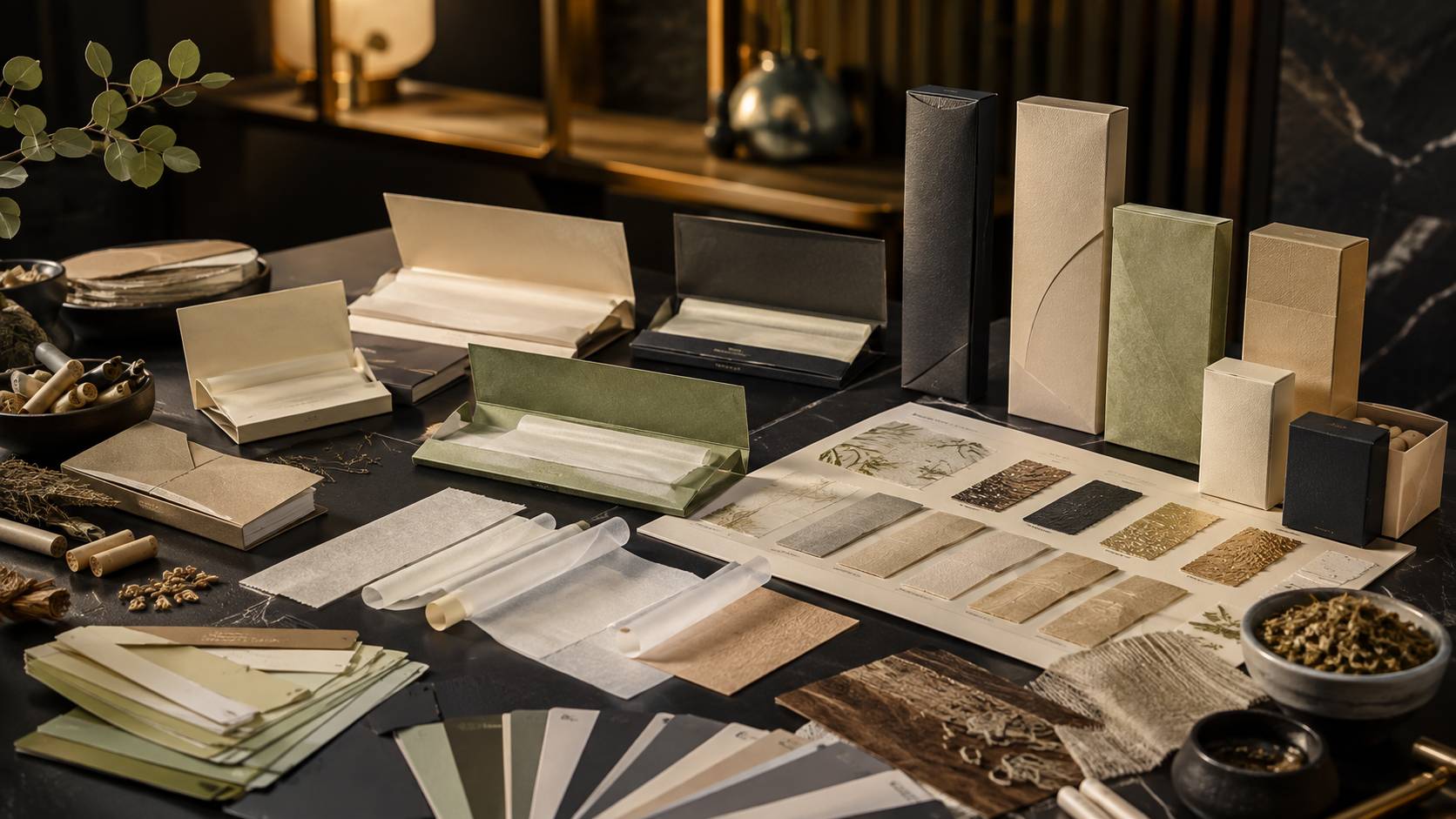
Ordering custom rolling papers becomes much easier once the specification is settled before the quotation stage. For private-label brands, wholesalers, and distributors, the seven decisions that matter most are paper material, paper specification, size and pack format, gum requirements, artwork and packaging, order quantity, and quality-control standards. Leave any of these open, and two suppliers may quote products that look similar on paper but are not actually comparable. A useful OEM inquiry therefore starts with a product brief—not just a logo. The following seven points can be used as a working checklist before asking a rolling paper supplier for samples or a final price.
Which Paper Specifications Should Be Fixed Before You Ask for a Quote?
Before preparing an OEM order, brands need to define the basic paper specifications that will affect product performance, supplier quotations, and future production consistency. These details provide the foundation for evaluating whether a product matches the intended market.
1. Decide the Paper Material
Start with the substrate.
Depending on the product line, buyers may encounter hemp-based paper, rice-based paper, wood-pulp paper, bleached paper, or unbleached paper. The right choice depends on how the brand wants the finished product positioned and handled.
Do not send an RFQ that simply says:
“Need high-quality rolling paper.”
That gives the factory very little to quote against.
A more useful request states:
- Preferred material;
- Bleached or unbleached
- Desired paper appearance;
- Whether printing is required on the paper;
- Whether an existing sample should be matched.
If you do not know which material to choose, ask for two or three existing samples before requesting a custom production sample. Comparing physical paper is more useful than choosing from product photographs.
2. Specify Thickness or Paper Weight
Material is only the first half of the paper specification. Thickness also affects handling, strength, and burn behavior.
For OEM sourcing, ask the supplier to state the paper specification in a measurable form, such as basis weight in g/m², rather than relying only on terms such as “thin” or “ultra-thin.”
Your RFQ can include fields such as:
| Specification | What to Confirm |
|---|---|
| Paper material | Hemp, rice-based, wood pulp, or other |
| Paper weight | Supplier specification in g/m² |
| color | White, natural/unbleached, or specified color |
| Surface | Plain or printed |
| Reference sample | Required / Not required |
| Performance sample | To be approved before production |
Do not assume that a thinner sheet is automatically a better sheet. The appropriate specification depends on the product you intend to sell.
The important purchasing question is simpler: Can the supplier reproduce the approved specification consistently in the bulk order?
What Size, Gum, and Pack Format Will Become the Actual SKU?
After confirming the paper characteristics, the next step is to decide how the product will be presented and used in the market. Size, format, and packaging details directly influence the final SKU structure and purchasing requirements.
3. Fix the Size and Booklet Configuration
“King size rolling papers” is not a complete purchasing specification.
Before comparing prices, write down the actual format you expect to receive. At minimum, confirm:
- Paper length in mm;
- Paper width in mm;
- Sheets per booklet;
- Booklets per display box;
- Display boxes per master carton;
- Flat paper or pre-rolled format.
This matters because pack configuration can distort price comparisons.
Imagine Supplier A quotes 50 booklets per display box while Supplier B quotes 24. Their unit quotations cannot be compared properly until the pack structure is normalized.
If you plan to sell more than one SKU, prepare a separate specification for each size rather than writing “1¼ and king size, assorted.”
4. Decide the Gum Requirement
The gum strip deserves its own line in the specification.
Ask what adhesive system is used and request a finished sample for evaluation. During sample approval, inspect:
- Gum-line position;
- Application consistency;
- Sealing behavior;
- Whether excessive moisture is needed;
- Whether the gum remains stable after normal storage.
For an importer, this is particularly relevant because the goods may spend weeks in cartons before reaching a retail shelf.
Instead of asking, “Is the glue good?” ask:
What gum is used, how is it applied, and how do you check gum-line consistency during production?
That question gives the supplier something specific to answer.
How Much of the Branding and Packaging Should Be Completed Before Sampling?
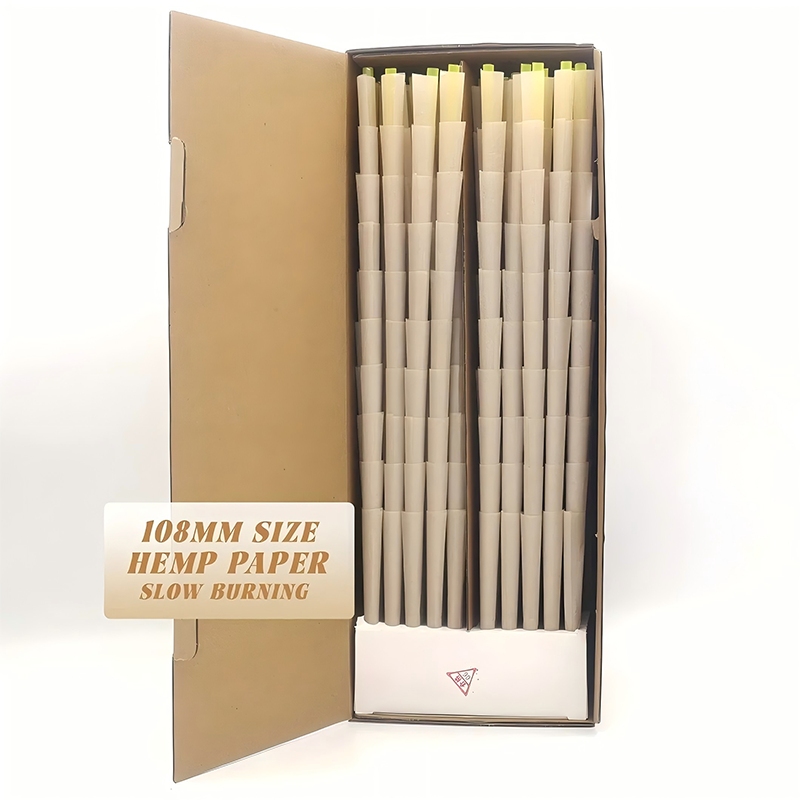
Once the product specifications are clear, customization becomes the next important step. A well-prepared branding plan helps avoid unnecessary changes during sampling and production.
5. Decide What Is Actually Being Customized
Private label does not always mean the same thing.
One brand may need only its logo printed on a standard booklet. Another may want a new booklet design, display box, carton marks, paper printing, and several SKUs under the same visual system.
Define the customization scope before the designer finishes the artwork.
A practical artwork brief should cover:
- Logo;
- Brand colors;
- Booklet front;
- Booklet back;
- Barcode area;
- Product information;
- Display-box artwork;
- Outer-carton marks;
- Required market-specific labeling;
- Printing finish, where applicable.
There is one sequencing mistake worth avoiding: do not finalize artwork before receiving the supplier’s correct dieline.
Artwork prepared against the wrong dimensions often has to be rebuilt around folds, trim lines, glue areas, or barcode positions.
A safer workflow is:
Product specification → supplier dieline → artwork → digital proof → physical sample → approval
For custom rolling papers, the physical sample should be checked as a complete product. Do not approve the printed cover while ignoring the paper inside.
What MOQ and Sample Terms Need to Be Clear Before You Pay a Deposit?
Product design alone does not determine whether an OEM project can move forward. Before production begins, brands also need to understand the order structure, sample process, and cost-related requirements.
6. Confirm MOQ by SKU, Artwork, and Packaging Version
An MOQ without context is not enough.
Suppose your launch includes:
- Two paper sizes;
- Three booklet designs;
- One display-box design.
If the supplier says the MOQ is 5,000 pieces, you still need to know whether that means:
- 5,000 pieces for the entire order;
- 5,000 per size;
- 5,000 per artwork;
- 5,000 per packaging version.
Ask the supplier to write the MOQ against each SKU in the quotation.
The same applies to custom logo requirements. The minimum quantity for a standard product and the minimum quantity for custom printing may not be identical.
Sampling terms should also be agreed before the deposit.
A typical approval sequence may involve:
- Existing stock sample;
- Artwork proof;
- Customized pre-production sample;
- Bulk-production confirmation;
- Pre-shipment inspection.
Record which stage represents the approved production standard.
When the bulk goods are finished, that approved sample gives both sides something physical to compare.
What Quality Checks Should Be Written Down Before Mass Production Starts?
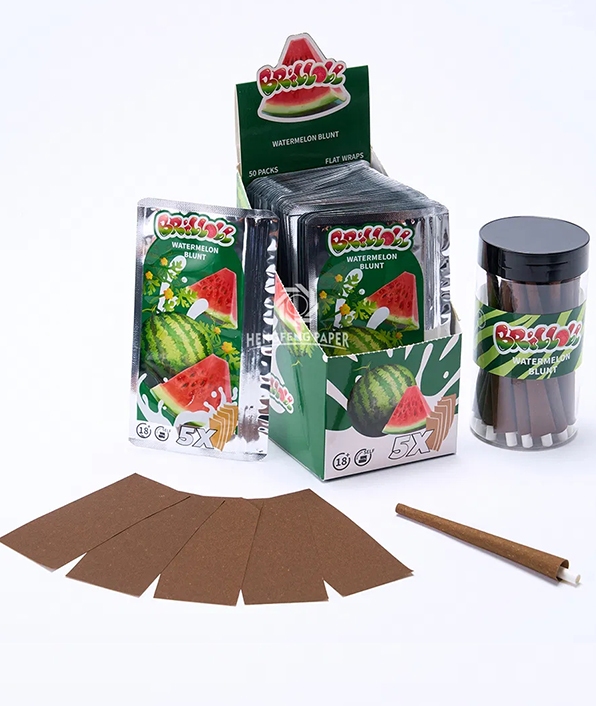
After product details and commercial terms are confirmed, quality control becomes the key step that connects the approved sample with the final shipment. Clear inspection requirements help both sides maintain the same production expectations.
7. Build the QC Standard Before the Goods Exist
Waiting until the cartons are ready to discuss quality is too late.
Before mass production, decide what will be checked and what information the final inspection should compare against.
For custom rolling papers, useful checkpoints can include:
| QC Item | What the Buyer Should Confirm |
|---|---|
| Dimensiones | Match the approved size specification |
| Paper | Match approved material and appearance |
| Sheet count | Correct quantity per booklet |
| Cutting | Clean and consistent edges |
| Gum line | Correct position and application |
| Printing | Correct artwork, registration, and text |
| Embalaje | Correct booklet and box assembly |
| Barcode | Correct version and readable print |
| Carton quantity | Match purchase order |
| Carton marks | Match shipping instructions |
The purchase order should also identify the approved artwork version and approved sample.
That small detail prevents an awkward question later: Which sample are we comparing the bulk production against?
Before releasing the balance payment or shipment, buyers should also confirm practical logistics information such as carton quantity, carton dimensions, gross weight, production completion date, and shipping arrangement.
Here is a final pre-production checklist that can be copied directly into an OEM sourcing file:
- Paper material confirmed
- Paper weight or thickness specification confirmed
- Paper dimensions confirmed
- Sheets per booklet confirmed
- Booklets per box confirmed
- Gum requirement confirmed
- Dieline received
- Artwork version approved
- MOQ confirmed for every SKU
- Customized sample approved
- QC checkpoints agreed
- Master-carton configuration confirmed
- Production lead time confirmed
- Shipping arrangement confirmed
If several of these items are still blank, the order is probably not ready for mass production.
What Can Bella420facto Support When Brands Develop Custom Rolling Papers?
Bella420facto-smoking accessories co.,ltd. works with overseas smoking-accessory buyers and provides rolling papers alongside other product categories. For OEM projects, the company supports customization, including small-quantity custom orders where applicable, and can assist with design, pre-shipment inspection, and international shipping arrangements. Its current rolling paper range includes flat papers and pre-rolled formats in different sizes. For a new private-label project, buyers can start by sending the intended paper material, size, pack configuration, artwork requirements, quantity, and destination market. That information gives both sides a clearer basis for selecting samples, confirming customization feasibility, and preparing a quotation without leaving major specifications open.
Conclusión
A custom rolling paper order should begin with a specification sheet, not simply a logo and target price. Decide the paper, thickness, size, gum, packaging, MOQ, and QC requirements first, then ask suppliers to quote against the same brief. Once a suitable sample is approved, keep it as the production reference. For the next step, prepare one RFQ containing your seven decisions and send it together with the artwork requirements and expected order quantity.
Preguntas frecuentes
1. What information should I send when requesting a custom rolling paper quotation?
Provide the paper material, dimensions, paper weight if known, sheets per booklet, packaging configuration, estimated quantity, logo or artwork requirements, destination market, and any reference sample you want the supplier to match.
2. Should I approve a sample before ordering private label rolling papers?
Yes. The approved sample should cover the actual paper, gum, cutting, booklet construction, printing, and packaging—not only the artwork. Keep one approved unit as a reference for checking bulk production.
3. Is the MOQ for custom rolling papers usually calculated per design?
It depends on the supplier and production method. Ask whether the MOQ applies per SKU, paper size, artwork, color, or total order, and have that information written clearly in the quotation.
4. What should brands check when comparing rolling paper suppliers?
Compare equivalent specifications rather than unit price alone. Check paper material, measurable paper specifications, pack count, customization scope, sample process, MOQ structure, production lead time, QC procedure, and shipping support.
5. What should be included in a rolling paper OEM purchase order?
The purchase order should identify each SKU, dimensions, quantities, packaging, approved artwork version, approved sample, agreed QC requirements, carton configuration, production timing, and shipping terms so that the production standard is unambiguous.
Artículos relacionados


INVERSIÓN CALIENTE EN TODO
REGIONES DEL MUNDO
REGIONES DEL MUNDO


