

How to Choose Glass Bongs for Wholesale: 5 Product Features Buyers Should Check
Sep. 17, 2026
00:00:10
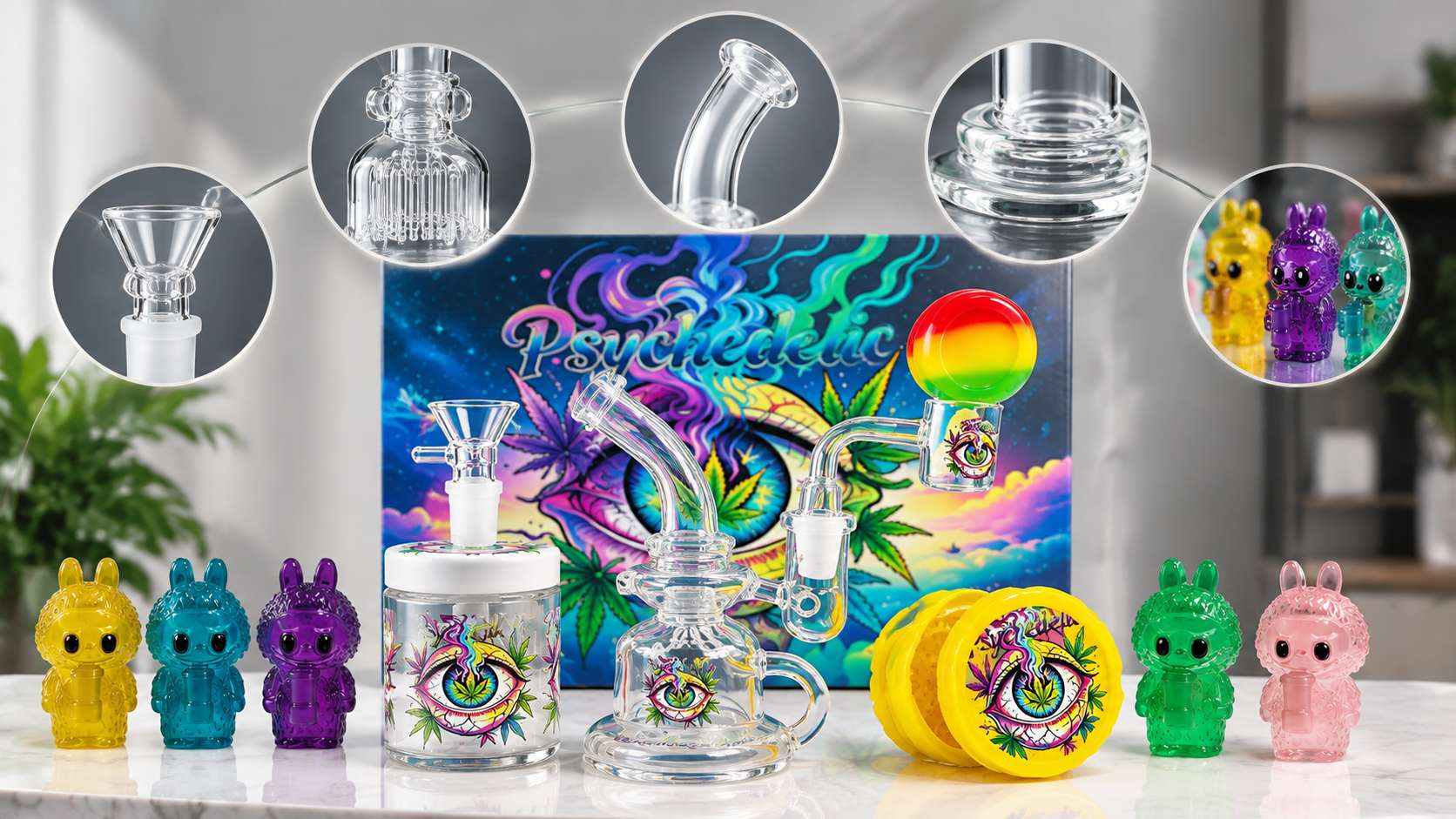
For wholesale buyers, choosing a glass bong should start with construction, stability, functional design, packaging, and production consistency rather than appearance alone. A visually attractive piece may sell well at first, but poor joints, awkward dimensions, difficult cleaning, or weak packaging can quickly turn into returns and damaged inventory. Smoke-shop buyers and distributors therefore need a practical way to compare samples before committing to a larger order. The five areas below focus on specifications that can be checked during sourcing and sample approval, without relying on vague labels such as “premium” or “high-end.”
What Glass Material and Construction Details Should Buyers Verify First?
Material is the first point to confirm because it affects heat resistance, handling, product weight, and the way a piece survives transport. The specification should come from the supplier or product sheet rather than from appearance.
Why Does the Glass Specification Matter?
Borosilicate glass is commonly used for smoking glassware because it tolerates temperature changes better than ordinary soda-lime glass, but buyers should still ask what material applies to the exact SKU being quoted. The supplier’s broader Glass Bong And Set category can show available product styles, but the material needs to be confirmed at item level.
During sample review, look beyond the body of the bong. Check the base, neck, joint area, mouthpiece, and any attached decorative sections for obvious bubbles, rough edges, uneven connections, or visible stress points. A heavy-looking piece is not automatically stronger, and a thick section in one area does not prove that the whole structure is consistent.
For purchasing records, a useful specification sheet should state the material, overall dimensions, individual package type, and any removable components supplied with the unit.
How Should Percolators and Downstems Be Evaluated for Wholesale Stock?
Filtration features can make products more attractive to retail customers, but added internal parts also create more areas that need to be checked. A complicated design is not necessarily the better buying choice if it is difficult to manufacture consistently or clean after use.
Functional Design Should Be Checked as a Complete System
When a bong uses a downstem, diffuser, or percolator, inspect whether the component is centered, firmly connected, and sized correctly for the chamber. The water path should be practical, and the internal feature should not create an obvious cleaning problem that customers will discover only after purchase.
Retail buyers should also consider assortment planning. A basic beaker-style piece may suit customers who value simplicity, while a more elaborate percolator design can occupy a different price and display position. The correct choice depends on the shop’s customer mix rather than on adding the largest possible number of features.
Before comparing two quotations, make sure the samples have equivalent construction. A simple straight-tube product and a multi-component piece cannot be compared fairly on unit price alone because the production and inspection requirements differ.
Which Size, Base, and Handling Features Matter for Retail and Shipping?
Dimensions affect more than user preference. They influence shelf space, carton efficiency, stability, product photography, and the chance of damage during transportation, so wholesale buyers need actual measurements rather than descriptions such as “small” or “large.”
Stability Should Be Checked on a Flat Surface
Place the sample on a level surface and check whether the base sits evenly. A tall or decorative design can look impressive but may become top-heavy if the base is too narrow for the overall shape. Mouthpiece angle, neck length, and the position of decorative elements also affect handling.
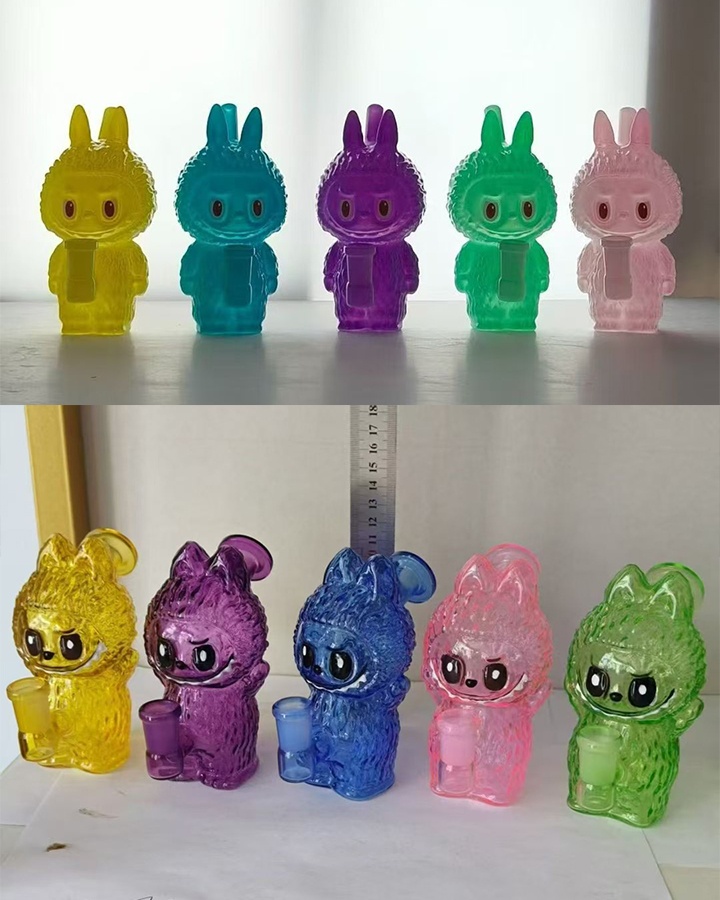
Product dimensions should be recorded in the purchase specification. For example, one current product page identifies a glass bong at 6.3 inches (16 cm), while another smoking kit includes a 20 cm bong. These figures apply only to those listed products and should not be generalized across the full range.
Packaging has to be assessed at the same time. A compact bong may reduce carton volume, but unusual shapes can require more internal protection. Buyers should therefore compare the finished packed unit, not only the bare product.
How Can Buyers Reduce Cleaning and Replacement-Part Complaints?
A bong may pass an appearance inspection and still cause customer frustration if routine cleaning is difficult or removable pieces are hard to replace. These issues are especially relevant to retailers because they can generate questions long after the original wholesale order has been delivered.
Simpler Access Usually Makes Maintenance Easier
During sample evaluation, check whether the chamber, downstem area, and mouthpiece can be reached with normal cleaning tools. Narrow internal passages, fixed decorative structures, or complex chambers may require more maintenance than a basic design.
Removable components should fit securely without excessive force. If the model uses replaceable parts, the buyer should ask whether the same dimensions will remain available for repeat orders and whether spare components can be supplied separately. This is a procurement issue, not only a consumer convenience issue: discontinued or inconsistent fittings can leave retailers with products that are difficult to support.
For assortment planning, it can be useful to balance visually distinctive pieces with simpler designs. The company’s general product range also shows that glass bongs are sold alongside smoking kits and other accessories, which is relevant when buyers plan mixed-category inventory rather than a single standalone SKU.
What Should Buyers Check Before Approving a Bulk Glass Bong Order?
The final sample should become a production reference rather than simply a sales sample. Once dimensions, material, construction, and packaging have been agreed, the same points need to be checked again before shipment.
Build the Inspection Around the Finished Retail Unit
A practical inspection can cover the visible glass condition, joint fit, base stability, included components, package condition, carton quantity, and artwork where customized packaging is involved. Buyers should also compare several units rather than judging an order from one piece.
A simple pre-shipment checklist may include:
- Material matches the approved specification
- Dimensions match the approved sample
- Base sits evenly
- Joints and removable components fit correctly
- No obvious cracks, sharp edges, or major visual defects
- Required accessories are included
- Individual packaging is complete
- Carton quantity matches the purchase order
- Custom artwork matches the approved version
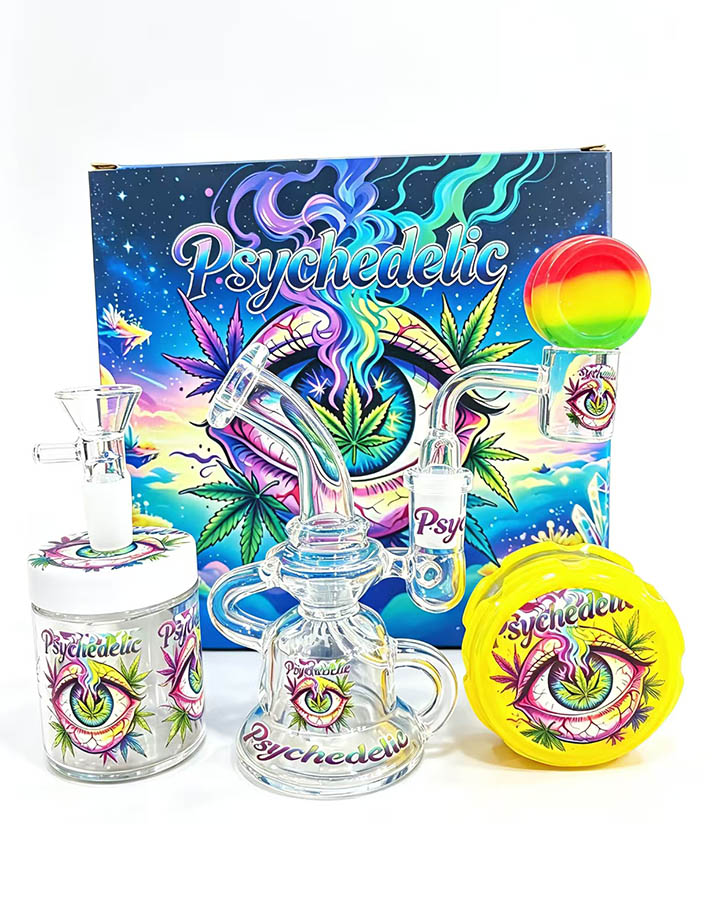
Packaging information should be written into the order file. One current glass bong product is listed with an individual box و 50 pieces per carton, while a separate smoking-set product lists 16 sets per carton with carton dimensions of 61 × 51 × 45 cm. Those figures belong only to the published SKUs and illustrate why pack configuration must be checked product by product.
Need Help Matching Glass Bong Specifications to Wholesale Orders?
Once material, dimensions, construction, packaging, and inspection points have been defined, the next step is matching those requirements to an available product or customization route. Bella420facto-smoking accessories co.,ltd. lists glass pipes, bongs, bong sets, and other smoking accessories among its product categories and states that small-order customization is available. One published 6.3-inch Labubu glass bong uses high borosilicate glass, individual-box packaging, and a 50-piece carton configuration, while another glass bong smoking set publishes the included components and carton data. These item-level parameters give buyers a concrete basis for discussing samples instead of relying on general product descriptions.
استنتاج
Wholesale glass bong selection works better when buyers compare measurable specifications instead of judging products mainly by design. Material, joint construction, filtration components, dimensions, stability, maintenance access, and packaging all affect the commercial result. The approved sample should be retained and linked to the purchase specification so that bulk production can be checked against the same reference. Before placing an order, buyers should confirm the exact SKU data and packing arrangement rather than applying one product’s parameters to the entire category.
الأسئلة الشائعة
1. What should wholesale buyers check first when sourcing glass bongs?
Start with the stated glass material, overall dimensions, construction, base stability, joint quality, included components, and packaging. These details provide a more useful comparison than appearance or a general “high-quality” description.
2. Is borosilicate glass relevant when selecting a glass bong?
Yes, but the material should be verified for the exact SKU. The company currently lists at least one glass bong product as high borosilicate glass; that specification should not automatically be assumed for every model.
3. Are more percolators always better for wholesale glass bongs?
No. More internal components can change filtration and visual appeal, but they may also increase cleaning difficulty and inspection requirements. Buyers should match the design complexity to their target retail customer and price position.
4. How should glass bong packaging be evaluated before bulk ordering?
Inspect the complete packed sample, including the individual box, internal protection, included parts, and master-carton configuration. Confirm that the packaging protects the actual shape and dimensions of the selected bong during transport.
5. Why should buyers retain an approved glass bong sample?
The approved sample gives purchasing and quality teams a physical reference for dimensions, appearance, component fit, construction, and packaging. It is especially useful when checking mass production or comparing a later repeat order.


استثمار ساخن في كل
مناطق العالم
مناطق العالم


